
A guide to the types of hydraulic motor
Hydraulic motors play an important role in the operation of many types of heavy machinery, converting hydraulic energy into mechanical power to drive movement.
There are several types of hydraulic motor, each designed to suit different operating requirements.
The most common include axial piston, radial piston, gear and vane motors. Understanding the differences between these designs helps explain how hydraulic power is used across construction, quarrying, mining and other heavy machinery applications.
Each hydraulic motor design offers different advantages in terms of torque, speed, efficiency and durability. The right choice depends on the application, operating conditions and performance requirements of the machine. Below, we’ll look at the main hydraulic motor types and explore where each is commonly used.
Axial Piston Motors
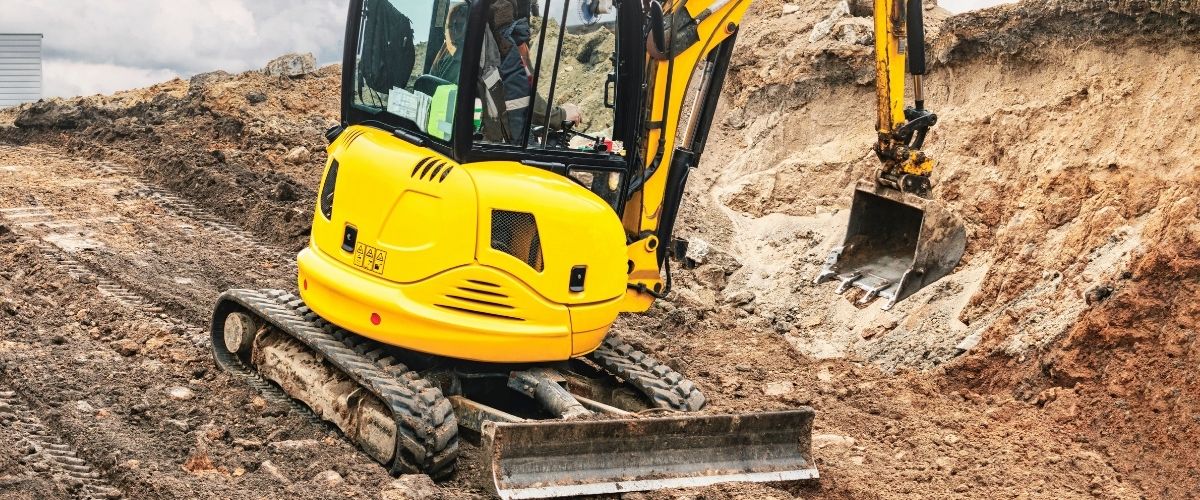
Axial piston motors are widely used in heavy machinery, particularly in excavator travel drives and swing drives.
They use a series of pistons arranged parallel to a central shaft. As pressurised hydraulic oil acts on the pistons, their movement generates rotary motion. Axial piston motors are well suited to demanding applications because they can deliver high power, operate at high pressures and provide efficient, controlled movement.
There are two main designs:
- Swash plate motors: Use a rotating cylinder block and angled swash plate to convert piston movement into rotation.
- Bent axis motors: Use an angled arrangement between the cylinder block and output shaft to produce rotary movement.
Axial piston motors can also be designed with fixed or variable displacement. Fixed displacement motors provide a set volume of oil per revolution, while variable displacement motors can adjust their displacement to change their speed and torque characteristics.
Radial Piston Motors
Radial piston motors use pistons arranged around a central shaft, with the pistons moving outwards against a cam or eccentric arrangement to produce rotation.
They are particularly suited to applications requiring high torque at low speeds, making them useful in demanding heavy-duty machinery and other high-torque hydraulic applications. Radial piston motors are often described as low-speed, high-torque motors. Their design makes them suitable for applications where substantial turning force is required without high rotational speeds.
Gear Motors
Gear motors use pressurised hydraulic oil to turn gears within a housing, converting hydraulic energy into rotary movement.
They are generally simpler in construction than piston motors and are commonly used in applications where a compact, economical hydraulic drive is required. Two common designs are external gear motors, which use two meshing gears, and internal gear motors, which use an inner gear rotating within an outer gear. Gear motors are widely used in auxiliary hydraulic functions and other applications across mobile and industrial machinery.
Orbital Motors
Orbital motors are a type of hydraulic gear motor designed to provide controlled rotary movement, often at relatively low speeds and with high torque.
They commonly use a gerotor or geroller arrangement, in which an inner gear rotates within an outer element. In geroller designs, rollers are incorporated to reduce friction and improve performance. Orbital motors are found in a variety of machinery, including agricultural equipment, compact machinery, conveyors and auxiliary drives.
Vane Motors
Vane motors use a rotor fitted with sliding vanes positioned inside a housing. Pressurised hydraulic oil acts on the vanes, creating rotary movement.
They can provide smooth operation and are used in certain industrial and mobile hydraulic applications, including auxiliary drives. Although less commonly associated with the main travel drives of larger excavators, vane motors form part of the wider range of hydraulic motor designs used in machinery.

Identifying the Correct Hydraulic Motor or Final Drive
Hydraulic motors are a key component of many final drive and swing drive assemblies.
The motor and gearbox work together to provide the controlled, high-torque movement needed to propel the machine.
Swing drives operate on a similar principle, using a hydraulic motor and reduction gearbox to rotate the excavator’s upper structure. Although axial piston motors are commonly used in these applications, the precise motor design and configuration will depend on the machine and manufacturer.
When replacing a hydraulic motor or final drive, identifying the correct unit is essential.
Different machines may use motors and drive assemblies with similar external appearances but different specifications, mounting arrangements or performance characteristics. Identification plates, model numbers, serial numbers and machine specifications can all help establish which unit is required.
At Plant Parts, we understand the important role hydraulic motors play in keeping heavy machinery moving. Whether you’re looking for a replacement final drive or swing drive, or need help identifying a particular motor or component, our team can help.
With access to an extensive range of OEM, genuine and aftermarket parts, along with reconditioned units and specialist repair services, we can help you find a suitable solution for your machine.
If you are struggling to identify the correct part, simply speak to the team to access thousands of parts numbers and detailed guidance.
Call us +44 (0) 1473 820910
Email us [email protected]
Whatsapp (Text Only) +44 7762 142091
Hydraulic Motors: Frequently asked questions
A hydraulic motor converts hydraulic energy into mechanical power, producing rotary movement. It uses pressurised hydraulic oil to turn a shaft, which can then drive machinery or equipment.
Hydraulic motors are used in a wide range of heavy machinery, including excavators, tracked dumpers, construction equipment and industrial machinery.
An axial piston motor uses a series of pistons arranged parallel to a central shaft. Pressurised hydraulic oil moves the pistons, creating rotary movement.
Axial piston motors are widely used in heavy machinery because they can provide high power, operate at high pressures and deliver efficient, controlled movement.
They are commonly found in excavator travel drives and swing drives.
There are several types of hydraulic motor, each designed for different applications. The main types include:
- Axial piston motors
- Radial piston motors
- Gear motors
- Orbital motors
- Vane motors
The type used will depend on the machine, its hydraulic system and the performance requirements of the application.
A radial piston motor uses pistons arranged around a central shaft. Hydraulic pressure moves the pistons against a cam or eccentric arrangement, producing rotary movement.
Radial piston motors are particularly suited to applications requiring high torque at low speeds.
They are used in some heavy-duty machinery and specialist hydraulic applications.
A hydraulic gear motor uses pressurised oil to turn gears within a housing, converting hydraulic energy into rotary movement.
Gear motors are commonly used in auxiliary hydraulic functions and other applications where a compact, economical hydraulic drive is required.
An orbital motor is a type of hydraulic gear motor designed to provide controlled rotary movement, often at low speeds and with high torque.
Orbital motors are used in a variety of machinery, including agricultural equipment, compact machinery and auxiliary hydraulic drives.
A hydraulic vane motor uses a rotor fitted with sliding vanes. Pressurised hydraulic oil acts on the vanes to produce rotary movement.
Vane motors can provide smooth operation and are used in certain industrial and mobile hydraulic applications.
Axial piston motors are commonly used in excavator final drives.
The motor converts hydraulic energy into rotary movement, which is transferred through a planetary reduction gearbox to drive the excavator’s tracks.
The precise motor design and configuration depend on the machine and manufacturer.
Axial piston motors are commonly used in excavator swing drives.
The hydraulic motor provides rotary movement, which is transferred through a reduction gearbox to rotate the excavator’s upper structure.
The motor and gearbox work together to provide the controlled movement and torque required to swing the machine.
In some applications, it may be possible to replace or repair the hydraulic motor separately.
However, depending on the design and condition of the unit, replacing the complete final drive may be the more suitable option.
The correct solution will depend on the machine, the drive assembly and the nature of the fault.
Plant Parts can help identify the appropriate final drive or swing drive solution based on the available machine and component information.
The best starting point is the identification plate on the motor or drive assembly.
This may include:
- Manufacturer
- Model number
- Serial number
- Part number
If the identification plate is missing, damaged or unreadable, photographs of the unit and the machine’s make, model and serial number can help with identification.
Plant Parts supplies final drives, swing drives and associated hydraulic components for a wide range of heavy machinery.
We can help customers identify the correct replacement unit using machine details, identification plate information and other technical specifications.
Depending on the application and product, we can also support customers with repair, rebuild and replacement options.
Yes, Plant Parts supports customers with hydraulic drive repairs and reconditioning, including final drives and swing drives.
Our workshop services include inspection, repair and testing, helping customers identify a suitable solution for their machinery.
To help identify the correct unit, it is useful to provide:
- Machine make and model
- Machine serial number
- Motor or drive identification plate details
- Part number, if available
- Photographs of the existing unit
If you’re unsure which part you need, our experienced team can help identify the correct unit using the machine details, identification plate or photographs. They make it easier to source the right parts and get your machinery back to work. Simply call or message the team for help.
A hydraulic motor converts hydraulic energy into rotary movement.
A final drive is a complete drive assembly, typically incorporating a hydraulic motor and a reduction gearbox.
On a tracked excavator, the hydraulic motor provides the rotary power, while the gearbox reduces the motor’s speed and increases torque to drive the track sprocket.